Sunday, 24 January 2016

Wednesday, 19 August 2015
Do it yourself wine.....Salut Salut!
Mango Wine
3-4 lbs fresh mango
2-1/2 lbs finely granulated sugar
7-1/4 pts water
1-1/2 tsp acid blend
1/2 tsp pectic enzyme
1 tsp yeast nutrient
1/4 tsp tannin
Wine yeast
Put water on to boil. Meanwhile, peel the mangos, cut the flesh away from the large seed, and slice and dice the flesh. Pour diced flesh in nylon straining bag, tie bag and put in primary. Mash the flesh with your hands or a sterilised potato masher or piece of hardwood. Dissolve sugar in boiling water and pour over mashed fruit. Add acid blend, tannin and yeast nutrient.
Cover and allow to cool to room temperature. Add pectic enzyme, cover primary and set aside for 12 hours. Add yeast and recover the primary. Squeeze bag two to three times daily for ten days. Drip drain bag, squeeze gently to extract extra juice and discard pulp (or use to make a “second wine”).
Allow wine to settle overnight, then rack into secondary. Top up and fit airlock. Rack again after 30 days and again every two months for six months. Stabilise, sweeten to taste, wait ten days, and rack into bottles. Age this wine a year before drinking. Serve chilled or over ice.
3-4 lbs fresh mango
2-1/2 lbs finely granulated sugar
7-1/4 pts water
1-1/2 tsp acid blend
1/2 tsp pectic enzyme
1 tsp yeast nutrient
1/4 tsp tannin
Wine yeast
Put water on to boil. Meanwhile, peel the mangos, cut the flesh away from the large seed, and slice and dice the flesh. Pour diced flesh in nylon straining bag, tie bag and put in primary. Mash the flesh with your hands or a sterilised potato masher or piece of hardwood. Dissolve sugar in boiling water and pour over mashed fruit. Add acid blend, tannin and yeast nutrient.
Cover and allow to cool to room temperature. Add pectic enzyme, cover primary and set aside for 12 hours. Add yeast and recover the primary. Squeeze bag two to three times daily for ten days. Drip drain bag, squeeze gently to extract extra juice and discard pulp (or use to make a “second wine”).
Allow wine to settle overnight, then rack into secondary. Top up and fit airlock. Rack again after 30 days and again every two months for six months. Stabilise, sweeten to taste, wait ten days, and rack into bottles. Age this wine a year before drinking. Serve chilled or over ice.
Enjoy and make your own Trini wine
Hibiscus Flower Wine
1-2 oz dried hibiscus flowers
2-1/2 lbs sugar
7 pt water
1-1/2 tsp acid blend
1 tsp yeast nutrient
1 pkg yeast
Note: Dried, whole or crushed flowers are available from many specialty and health food stores and are used to make a delicious tea.
Combine water and sugar and put on to boil, stirring occasionally until sugar is dissolved. Tie flowers in nylon straining bag and put in primary. Pour boiling sugar-water over flowers and stir in all ingredients except yeast.
Cover until water cools to room temperature. Squeeze flowers to extract maximum flavour and then discard flowers or use for tea. Add activated yeast, and stir. Rack to secondary, top up with water and fit airlock. Ferment 30 days then rack into clean secondary. Refit airlock and rack again after additional 30 days.
Salut Salut!
1-2 oz dried hibiscus flowers
2-1/2 lbs sugar
7 pt water
1-1/2 tsp acid blend
1 tsp yeast nutrient
1 pkg yeast
Note: Dried, whole or crushed flowers are available from many specialty and health food stores and are used to make a delicious tea.
Combine water and sugar and put on to boil, stirring occasionally until sugar is dissolved. Tie flowers in nylon straining bag and put in primary. Pour boiling sugar-water over flowers and stir in all ingredients except yeast.
Cover until water cools to room temperature. Squeeze flowers to extract maximum flavour and then discard flowers or use for tea. Add activated yeast, and stir. Rack to secondary, top up with water and fit airlock. Ferment 30 days then rack into clean secondary. Refit airlock and rack again after additional 30 days.
Salut Salut!
Sunday, 16 August 2015
Tips to Drink Wine and Stay Thin
Most wine has anywhere from 130-175 calories per glass. If you’d like to find out the specifics on a particular wine, check out the wine nutrition facts infographic . The interesting thing about wine calories is that our bodies digest alcohol (ethanol) differently than we digest food because it is a toxic substance. Our bodies send excess ethanol into a complex metabolic process involving our liver which eventually releases acetic acid that is secreted (a.k.a. we pee it out) so it doesn’t all get converted to energy. It’s important to note that everyone’s physiology is different: women, Asians, Native Americans and Inuits secrete less alcohol than Caucasian males.
What’s weird is that if you are drinking at a rate higher than you can metabolize alcohol, you are more likely to NOT absorb all its calories. This doesn’t mean you can go out and drink a bottle of wine, it just means that alcohol calories are a little more forgiving than say… ice cream calories.
Do enjoy a glass of wine at the gym.......lol
Friday, 7 August 2015
Learning more about wines
Good wine is one of life's greatest pleasures. Whether you are a novice or a connoisseur, interested in simply sipping or expertly analyzing, enjoying a glass of wine can be a sublime experience.
Unfortunately, many people find wine and how to choose, serve, and describe it more intimidating than enjoyable. The very scope of the topic seems daunting. But never fear -- you don't have to take a class to appreciate the subtleties of fine wine.
Still, as with many things in life, a little knowledge goes a long way. Just as a musical performance is enhanced by knowledge of the composer or the piece, a bottle of wine is more enjoyable if you know something about it. Learn to taste the story in the wine, and you can transcend the intimidation.
To appreciate wine as something more than mere drink, all you'll need is conscious, deliberate awareness. Let's face it: It makes little sense to pay the premium for wines of character only to swallow them unconsciously. Each wine has a personality waiting to be discovered: You just need to decide whether you like it.
This is a very personal endeavor. Responses to wine are as individual as fingerprints. An aroma or flavor that is pleasing to you may not be so to another. The trick is translating your preferences into words. Accomplish this, and you will add new dimensions to your enjoyment of wine.
So, how to begin? You begin by understanding what's in your glass, tasting what's in your glass, and evaluating what's in your glass. Sampling wine and recording your impressions is an effective (and festive!) way to gain confidence choosing and evaluating wine. In this article, you will learn about all the aspects of wine and wine tasting. You will learn about the various varieties of wine and how they are made, as well as how to taste and appreciate wine.
In many ways, beginning a quest for wine knowledge is like entering a whole new world: a new language to learn, new techniques to master, and so many wonderful selections of wine to sample. Enjoy the journey!
Getting Started
As you set out to explore the world of wine, you might feel unsure about how to begin. Should you take a class? Join a wine-tasting group? Visit a winery? Buy a variety of wines and start sampling? There's not one set rule you must follow; rather, think of it as having unlimited choices! The following tips may help you find your way:
Find a guide. Every new journey benefits from the presence of an experienced guide. Whether you're exploring a mountain landscape, the wildlife of a faraway land, or the ins and outs of wine, an experienced guide can be your key to discovering hidden gems and expanding the horizons of your knowledge. You might try your local wine merchant, a wine-bar operator, a knowledgeable bartender, a wine educator, or even a friend who knows more about wine than you do.
Hit the books. This might seem like an obvious step, the wealth of available information can be a little overwhelming to even the most eager wine connoisseur. With books, magazines, newsletters, and Web sites offering opinions, evaluations, criticisms, and historical perspectives on everything from winemakers and vineyards to wineries and growing regions, you should have no trouble establishing a foundation for learning.
 Learn the language. Consider subscribing to a wine magazine (or two or three). Filled with pages of wine reviews, a good wine magazine offers a leisurely opportunity to learn the language of wine. Merchants' newsletters and offering catalogs are also good sources for building a wine vocabulary and learning about particular styles of wine and growing regions. What's more, these sales materials are usually mailed out free of charge, so arrange to receive several, including those from merchants beyond your hometown. By developing a rich wine vocabulary early on, you'll find it easier to express your impressions and preferences.
Taste as often as opportunity allows. This is the enjoyable part! There's no substitute for tasting, tasting, and more tasting. Try more than one wine at a time for the sake of comparison. Add a few friends to the mix for a truly festive time!
Treat yourself to good wine. The most vivid and memorable attributes of a varietal (a wine made from a specific grape variety, such as Cabernet Sauvignon or Chardonnay), a growing region, or a vintage are most easily discovered in wines of high quality. So, taste the best you can afford. That way, you'll get a more distinctive palate (or taste) memory. Occasionally splurge on a truly great wine: It's an excellent way to reward yourself!
Experiment with the unfamiliar. Life is too short to restrict yourself to the "vanilla" and "chocolate" of the wine world: Chardonnay and Cabernet Sauvignon. Take advantage of an opportunity to taste a wine you've never heard of. You may decide you don't like it, or it may prove delightful, opening up an entirely new avenue of wine exploration. Either way, you've added another dimension to your wine adventures.
Express yourself. It's difficult to know how or where to start describing a wine. And though it seems easy enough to sip and swirl the wine to judge its flavors, this can be a fleeting experience, one that may not add much to your taste memory in the long run. For this reason, it's a good idea to take some brief notes while you are sampling a wine, even if you never look at them again. The act of translating your instincts into words challenges you to make judgments and resolve uncertainties.
Enjoy yourself. Learning about wine should never be frustrating. After all, the goal here is to increase your enjoyment of wine.
Be patient. No one becomes an authority in a day, a week, or even a month. Knowledge comes with experience, and experience is only gained with time and patience. And there's always something new under the sun, even for the experts. Fortunately, the journey is as sweet as the destination.
Whatever you seek to learn, which wine to serve with dinner, the differences between Pinot Blanc and Pinot Gris, how to read a wine label, techniques for wine tasting, the first step of your journey starts here.
It's All About the Grapes
If you've ever glanced at a restaurant wine list or browsed the wine aisle of the grocery store, you know there are a lot of different kinds of wine out there. But that's just the tip of the iceberg. Several hundred grape varieties are used to make the world's wines, resulting in different flavors, personalities, and qualities. The sheer variety can make choosing just one bottle a bit overwhelming, especially when they all look so enticing. Then again, isn't it fun to consider the possibilities?
 Although many kinds of grapes are used to make wine, only a fraction (the classic or noble grape varieties) produce truly superior wines. For red wine, noble grape varieties include Cabernet Sauvignon, Merlot, Pinot Noir, and Syrah; for white, Chardonnay, Chenin Blanc, Riesling, and Sauvignon Blanc. Other noteworthy though less extraordinary grape varieties include such reds as Cabernet Franc, Nebbiolo, Sangiovese, Tempranillo, and Zinfandel; and such whites as Gewurztraminer, various types of Muscat, Pinot Blanc, Pinot Gris, Semillon, and Viognier.
A varietal wine is made primarily or exclusively from one grape variety. The minimum required percentage of the named grape is regulated by law and differs from country to country (or from state to state in the United States). California law, for example, requires that a varietal wine contain at least 75 percent of the grape named on the label. So a California Merlot must be at least 75 percent Merlot grapes, and a California Chardonnay must be at least 75 percent Chardonnay grapes.
In the "New World," essentially the United States, South America, Australia, New Zealand, and South Africa, most wines are named for the grapes from which they are produced. However, wines from "Old World" countries like France, Italy, Portugal, and Spain are usually named for the region in which the grapes were produced. So, a California wine made from Chardonnay grapes is labeled Chardonnay, but a French wine made from Chardonnay grapes might be called Chablis or Mersault (among other names), depending on the growing area.
If you are relatively new to the world of wine, it's best to explore the principal varietal wines first. Because these wines have a stronger flavor "personality" than those of lesser, more obscure varietals, they're more likely to make a lasting impression on your palate.
As you taste, keep in mind that wine grapes are products of the soil and climate of the vineyard in which they are grown; the same grapes can produce two wines that taste completely different; it all depends on where each vineyard is located. Viticulture practices (the way the vines are tended and how much fruit they are allowed to produce), the vines' age, the winemaker's skill and philosophy, and winery equipment also enter into the equation.
There are a lot of different wines out there to taste, and keeping them straight in your head can be difficult. In the next few sections we will explain the different varieties of wine in terms of taste and where in the world the grapes are grown.
Unfortunately, many people find wine and how to choose, serve, and describe it more intimidating than enjoyable. The very scope of the topic seems daunting. But never fear -- you don't have to take a class to appreciate the subtleties of fine wine.
Still, as with many things in life, a little knowledge goes a long way. Just as a musical performance is enhanced by knowledge of the composer or the piece, a bottle of wine is more enjoyable if you know something about it. Learn to taste the story in the wine, and you can transcend the intimidation.
To appreciate wine as something more than mere drink, all you'll need is conscious, deliberate awareness. Let's face it: It makes little sense to pay the premium for wines of character only to swallow them unconsciously. Each wine has a personality waiting to be discovered: You just need to decide whether you like it.
This is a very personal endeavor. Responses to wine are as individual as fingerprints. An aroma or flavor that is pleasing to you may not be so to another. The trick is translating your preferences into words. Accomplish this, and you will add new dimensions to your enjoyment of wine.
So, how to begin? You begin by understanding what's in your glass, tasting what's in your glass, and evaluating what's in your glass. Sampling wine and recording your impressions is an effective (and festive!) way to gain confidence choosing and evaluating wine. In this article, you will learn about all the aspects of wine and wine tasting. You will learn about the various varieties of wine and how they are made, as well as how to taste and appreciate wine.
In many ways, beginning a quest for wine knowledge is like entering a whole new world: a new language to learn, new techniques to master, and so many wonderful selections of wine to sample. Enjoy the journey!
Getting Started
As you set out to explore the world of wine, you might feel unsure about how to begin. Should you take a class? Join a wine-tasting group? Visit a winery? Buy a variety of wines and start sampling? There's not one set rule you must follow; rather, think of it as having unlimited choices! The following tips may help you find your way:
Find a guide. Every new journey benefits from the presence of an experienced guide. Whether you're exploring a mountain landscape, the wildlife of a faraway land, or the ins and outs of wine, an experienced guide can be your key to discovering hidden gems and expanding the horizons of your knowledge. You might try your local wine merchant, a wine-bar operator, a knowledgeable bartender, a wine educator, or even a friend who knows more about wine than you do.
Hit the books. This might seem like an obvious step, the wealth of available information can be a little overwhelming to even the most eager wine connoisseur. With books, magazines, newsletters, and Web sites offering opinions, evaluations, criticisms, and historical perspectives on everything from winemakers and vineyards to wineries and growing regions, you should have no trouble establishing a foundation for learning.
Visiting a winery can help you understand how wine is made.
Publications International, Ltd.
Taste as often as opportunity allows. This is the enjoyable part! There's no substitute for tasting, tasting, and more tasting. Try more than one wine at a time for the sake of comparison. Add a few friends to the mix for a truly festive time!
Treat yourself to good wine. The most vivid and memorable attributes of a varietal (a wine made from a specific grape variety, such as Cabernet Sauvignon or Chardonnay), a growing region, or a vintage are most easily discovered in wines of high quality. So, taste the best you can afford. That way, you'll get a more distinctive palate (or taste) memory. Occasionally splurge on a truly great wine: It's an excellent way to reward yourself!
Experiment with the unfamiliar. Life is too short to restrict yourself to the "vanilla" and "chocolate" of the wine world: Chardonnay and Cabernet Sauvignon. Take advantage of an opportunity to taste a wine you've never heard of. You may decide you don't like it, or it may prove delightful, opening up an entirely new avenue of wine exploration. Either way, you've added another dimension to your wine adventures.
Express yourself. It's difficult to know how or where to start describing a wine. And though it seems easy enough to sip and swirl the wine to judge its flavors, this can be a fleeting experience, one that may not add much to your taste memory in the long run. For this reason, it's a good idea to take some brief notes while you are sampling a wine, even if you never look at them again. The act of translating your instincts into words challenges you to make judgments and resolve uncertainties.
Enjoy yourself. Learning about wine should never be frustrating. After all, the goal here is to increase your enjoyment of wine.
Be patient. No one becomes an authority in a day, a week, or even a month. Knowledge comes with experience, and experience is only gained with time and patience. And there's always something new under the sun, even for the experts. Fortunately, the journey is as sweet as the destination.
Whatever you seek to learn, which wine to serve with dinner, the differences between Pinot Blanc and Pinot Gris, how to read a wine label, techniques for wine tasting, the first step of your journey starts here.
It's All About the Grapes
If you've ever glanced at a restaurant wine list or browsed the wine aisle of the grocery store, you know there are a lot of different kinds of wine out there. But that's just the tip of the iceberg. Several hundred grape varieties are used to make the world's wines, resulting in different flavors, personalities, and qualities. The sheer variety can make choosing just one bottle a bit overwhelming, especially when they all look so enticing. Then again, isn't it fun to consider the possibilities?
The traits of the grape ultimately determine the wine's character.
Publications International, Ltd.
A varietal wine is made primarily or exclusively from one grape variety. The minimum required percentage of the named grape is regulated by law and differs from country to country (or from state to state in the United States). California law, for example, requires that a varietal wine contain at least 75 percent of the grape named on the label. So a California Merlot must be at least 75 percent Merlot grapes, and a California Chardonnay must be at least 75 percent Chardonnay grapes.
In the "New World," essentially the United States, South America, Australia, New Zealand, and South Africa, most wines are named for the grapes from which they are produced. However, wines from "Old World" countries like France, Italy, Portugal, and Spain are usually named for the region in which the grapes were produced. So, a California wine made from Chardonnay grapes is labeled Chardonnay, but a French wine made from Chardonnay grapes might be called Chablis or Mersault (among other names), depending on the growing area.
If you are relatively new to the world of wine, it's best to explore the principal varietal wines first. Because these wines have a stronger flavor "personality" than those of lesser, more obscure varietals, they're more likely to make a lasting impression on your palate.
As you taste, keep in mind that wine grapes are products of the soil and climate of the vineyard in which they are grown; the same grapes can produce two wines that taste completely different; it all depends on where each vineyard is located. Viticulture practices (the way the vines are tended and how much fruit they are allowed to produce), the vines' age, the winemaker's skill and philosophy, and winery equipment also enter into the equation.
There are a lot of different wines out there to taste, and keeping them straight in your head can be difficult. In the next few sections we will explain the different varieties of wine in terms of taste and where in the world the grapes are grown.
Sunday, 19 July 2015


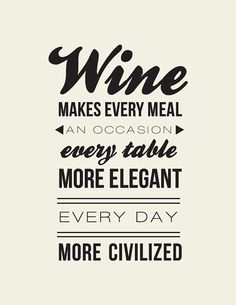

How To Cook With Wine?
Cooking With Wine - How To Cook With Wine

How To Cook With Wine:
Wine has three main uses in the kitchen - as a marinade ingredient, as a cooking liquid, and as a flavoring in a finished dish.
The function of wine in cooking is to intensify, enhance, and accent the flavor and aroma of food - not to mask the flavor of what you are cooking but rather to fortify it.
As with any seasoning used in cooking, care should be taken in the amount of wine used - too little is inconsequential and too much will be overpowering. Neither extreme is desirable. A small quantity of wine will enhance the flavor of the dish.
The alcohol in the wine evaporates while the food is cooking, and only the flavor remains. Boiling down wine concentrates the flavor, including acidity and sweetness. Be careful not to use too much wine as the flavor could overpower your dish.
For best results, wine should not be added to a dish just before serving. The wine should simmer with the food, or sauce, to enhance the flavor of the dish. If added late in the preparation, it could impart a harsh quality. It should simmer with the food or in the sauce while it is being cooked; as the wine cooks, it reduces and becomes an extract which flavors. Wine added too late in the preparation will give a harsh quality to the dish. A wine needs time to impart its flavor in your dish. Wait 10 minutes or more to taste before adding more wine.
Remember that wine does not belong in every dish. More than one wine-based sauce in a single meal can be monotonous. Use wine is cooking only when it has something to contribute to the finished dish.
Salut Salut!

Does white wine really send women crazy? From tears to tantrums, MailOnline investigates why this particular drink causes such carnage
Does white wine really send women crazy? From tears to tantrums, MailOnline investigates why this particular drink causes such carnage.

There was a time when an evening with friends was synonymous with a nice, chilled bottle of Sauvignon Blanc (or four).
But as the years have rolled by, that crisp, glass of gooseberry-flavoured nectar has fallen out of favour.
'No white wine for me - it sends me mental,' is how it started. 'Nor me,' said another friend, and on it went.
In fact, over the last few years, nearly a dozen of my female friends have declared they can no longer drink what used to be our favourite tipple.
One was almost arrested, another broke her wrist and another very nearly got run over.
There are countless other tales of tears, tantrums and Tube journeys going disastrously wrong.
But what is it about the drink of choice for so many women that sends them doolally - or 'psychotic', as one friend confessed?
Is there something in the wine itself or is it the way we consume it that wreaks such havoc?
Firstly, different people react to alcohol in very different ways, Dr Sarah Jarvis, medical adviser to the charity Drinkaware.
'Women react more quickly to alcohol,' she explained. 'If you’re a sturdy woman, you might think you can drink any scrawny man under the table - but don’t be fooled.
'Even if a woman is the same size as a man, she will have more body fat and less body water.
'Since alcohol is only distributed in body water, you’ll have a higher proportion of it in your bloodstream.’
This, she says, may be why women tend to suffer from worse hangovers.
Indeed, researchers at the University of Missouri-Columbi found that not only do women get drunk faster, but their hangover symptoms were more severe - even though they drank the same amount as the men.
Then there's eating on on an empty (or at least emptier than many a man's) stomach, which one study likened to taking alcohol intravenously.
Salut Salut!
6 Reasons Why a Little Glass of Wine Each Day May Do You Good
6 Reasons Why a Little Glass of Wine Each Day May Do You Good

2. Keep the scale in your cornerStudies find that people who drink wine daily have lower body mass than those who indulge occasionally; moderate wine drinkers have narrower waists and less abdominal fat than people who drink liquor. Alcohol may encourage your body to burn extra calories for as long as 90 minutes after you down a glass. Beer seems to have a similar effect.
3. Boost your bodys defensesIn one British study, those who drank roughly a glass of wine a day reduced by 11% their risk of infection by Helicobacter pylori bacteria, a major cause of gastritis, ulcers, and stomach cancers. As little as half a glass may also guard against food poisoning caused by germs like salmonella when people are exposed to contaminated food, according to a Spanish study.
4. Guard against ovarian woesWhen Australian researchers recently compared women with ovarian cancer to cancer-free women, they found that roughly one glass of wine a day seemed to reduce the risk of the disease by as much as 50 percent. Earlier research at the University of Hawaii produced similar findings. Experts suspect this may be due to antioxidants or phytoestrogens, which have high anticancer properties and are prevalent in wine. And in a recent University of Michigan study, a red wine compound helped kill ovarian cancer cells in a test tube.
5. Build better bonesOn average, women who drink moderately seem to have higher bone mass than abstainers. Alcohol appears to boost estrogen levels; the hormone seems to slow the bodys destruction of old bone more than it slows the production of new bone.
6. Prevent blood-sugar troublePremenopausal women who drink one or two glasses of wine a day are 40 percent less likely than women who dont drink to develop type 2 diabetes, according to a 10-year study by Harvard Medical School. While the reasons arent clear, wine seems to reduce insulin resistance in diabetic patients.
Salut Salut!

This $18,000 Bottle of Wine May Be Undrinkable

A bottle of one of the world's rarest wines sold for $18,000 at a London auction Thursday. There's just one problem - it may be undrinkable.
The Chateau Mouton Rothschild 1945 went to a private collector in Europe, auction house Bonhams said. The selling price - which equals about $1,500 a glass and could cover a Learjet charter from London to Saint-Tropez - was at the low end of expectations because the bottle may have suffered from too much oxidation.
The ullage, an industry term which refers to the space between the wine and the bottom of the cork, was below the neck of the bottle, '' which points to an increased chance of the wine being oxidized and undrinkable,'' said Richard Harvey, Bonhams' global head of wine, in an interview before the sale. Had it been in better condition, the 70-year-old bottle, part of a vintage described by critic Michael Broadbent as the "Churchill of wine," could have fetched twice the 10,000-pound ($15,000) to 15,000-pound range Bonhams had estimated in its sale catalog.
At 11,750 pounds, which includes a fee of 1,750 pounds to cover administrative costs, the bottle's price would cover the full tuition for a year at the London School of Economics. In its catalog, Bonhams says ullage levels increase with age but the house only auctions wines it considers to be in sound condition.Even spoiled, the claret is sought after for its historical value. The V on its label, designed by the French illustrator Philippe Jullian to celebrate the Allies' victory over Nazi Germany in the Second World War, also represents triumph over difficult weather conditions for Bordeauxvineyards at the time, including heavy frost and a heatwave that led to a drought.
Totally cool right!
Salut Salut!
Best Non Alcoholic Wine: Is There Such a Thing?
Best Non Alcoholic Wine: Is There Such a Thing?
So What Is the Best Non Alcoholic Wine?
Please see my picks below.
| Picture | Name | Process | Verdict | Price | Rating |
|---|---|---|---|---|---|
| Picture | Name | Process | Verdict | Price | Rating |
 | Ariel Cabernet Sauvignon Non Alcoholic Red Wine | Reverse Osmosis / Cold Filtration | Probably best non-alcoholic red wine out there. Doesn't taste exactly like red wine, but comes as close as you're gonna get with non-alcoholic wine. | $$$$ | 3.5 |
 | Ariel Chardonnay Non Alcoholic White Wine | Reverse Osmosis / Cold Filtration | One of the best non-alcoholic white wines out there. Less sweet compared to some of the others and worth a try. | $$$$ | 4.0 |
 | Sutter Home Fre White Zinfandel Non Alcoholic Wine | Distillation | A little tart, and less sweet than other non alcoholic wines. Paired with a light meal like chicken or pasta with white sauce is best. | $$$$ | 4.2 |
 | Sutter Home Fre Brut Non Alcoholic Wine | Distillation | Good alternative for alcoholic sparkling white wines that is reasonably priced as well. | $$$ | 4.0 |
 | Pure Vitis-Merlot Organic Grape Juice | Juice | Although not technically wine, this one is worth a try. A little too sweet for my taste, it may suit some. | $$$ | 3.0 |
Salut Salut!
Two Local wines you never knew about!
Two Local wines you never knew about!
It was very hard to track down a perfect explanation of these two wines but I believe Felix did it justice.

Cerise Wine
As a boy growing up in the 80’s, the Cerise fruit ( Flacourtia indica ) was not much of a favourite of mine. First of all, the tree had a lot of picka (thorns) and that was a turn off, because you couldn’t climb the tree readily. Then you had to deal with the fruit itself. There were a lot of seeds to contend with and after wrestling with the seeds in your mouth for a while there wasn’t much “flesh” to eat. Jeezan ages!
But, it was all good and helped us pass time. Purpled tongues and maybe a bit of “rack” or “tie tongue” sensation in our mouths was commonplace between my friends and I as we raided a Cerise tree or two. And, it would have been short lived anyway because by then Pommerac would have been in season and the Pommerac tree would have been laden with fruit, boughs almost to touch the ground, straining under the weight, begging us to ease its burden lol!……
Those were the days. The seedy Cerise fruit left an indelible taste memory in my mind and I cannot get it out of my head. That’s where the idea for the wine came or rather popped into my mind one day. So, while up in the countryside mom got my nephew to pick some of the fruit to make some Cerise wine since it was not commonly done at home. We were accustomed to more passion fruit, rice, cashew, guava, pommerac and five finger wine, made just in time for the Christmas season. So off to another wine making adventure we went……
…….As I held the bottle of red tinged Cerise wine up against the light to admire the colour, I sighed. It was worth it, one sip and the fruitiness was there like I remembered when I was young; pastelle shades of flavour tingled my taste buds and evoked all those taste memories that were locked away; waiting for the right time; the right stimulus; to be alive again if but for a moment taking you down memory lane.

Five Finger Wine
Wine from plants, barks and flowers??? Yep, that’s right. We have taken plants like the famous Chadon Beni (Eryngium Foetidum), Aloes ( Aloe vera), Timarie ( Neptunia Aquatica ), the aphrodisiac bark Bois Bande ( Roupala Montana ) and even Hibiscus flowers to make wine. Personally, I haven’t tasted the chadon beni and timarie but common ones like guava, passion fruit, cashew, cane, rice etc I have had at one time or another while house paranging, at a lime or from friends…. I even heard of some people using dasheen to make wine….in fact I think we Trinis could take almost anything to make wine LOL!!
Anyhow, today I’m going to show you how to make five finger wine. From the looks of it though, you could substitute the five finger with any other fruit and make any other type of wine as well. The steps are simple to follow; just make sure everything is sterilized with hot water. Here’s five finger ( carambola, star fruit) wine. Enjoy the fruitiness!
Salut Salut!
How to pair Wine and Food?
How to pair Wine and Food?
We have all been here, either when preparing for a hot date or trying to impress an in-law. Here is a way to be the expert of the occasion.

Salut Salut!
5 Ways To Open A Wine Bottle Without A Corkscrew
5 Ways To Open A Wine Bottle Without A Corkscrew.
Corkscrews have a nasty habit of playing hide and seek on the days you need a glass of wine the most. The stress of every minute that passes as you and your wine bottle wonder what to do next just multiplies the number of glasses you’ll need to wind down. We’ve all been there. But there’s hope. Here are 5 ways to open a wine bottle without a corkscrew.
1. Open it with your shoe
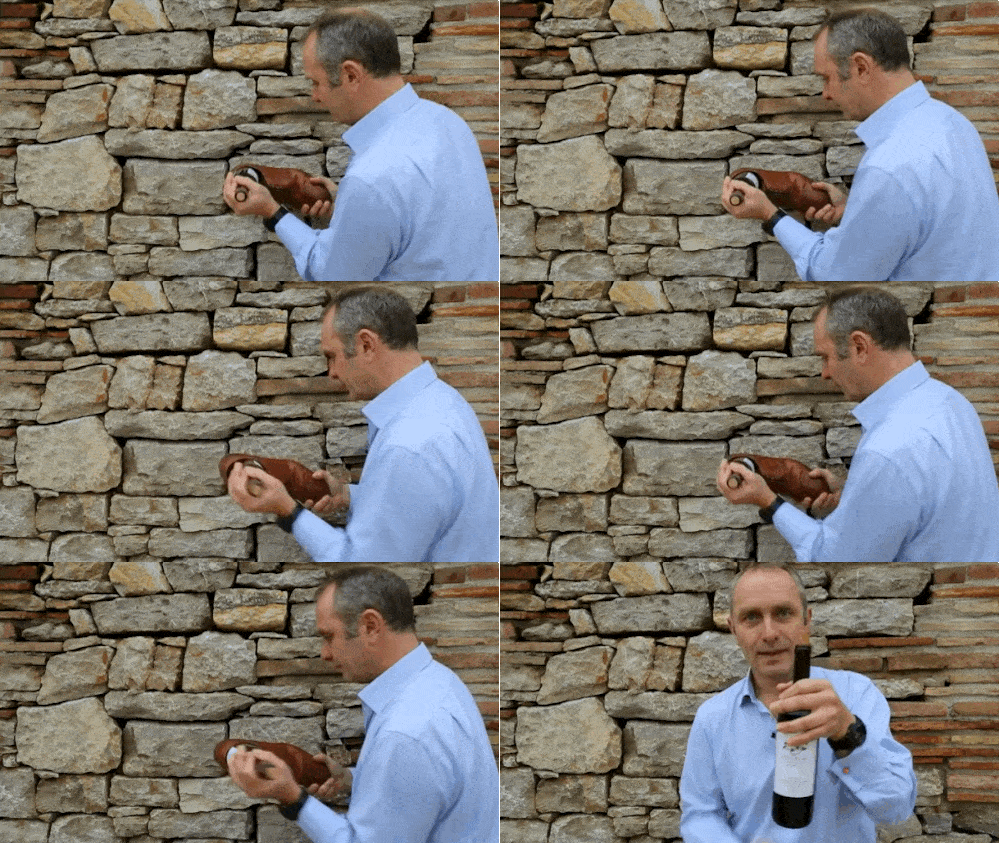 (Source: Mirror / Mirabeau Wine)
Yes, this is a real way to open a wine bottle. Remove the wrapping around the cork first, then place your bottle in the shoe. Give it a few good whacks against a (solid) wall, and watch the cork inch its way out. Voila! You may now proceed with chugging your wine in celebration.
2. Take a hammer to it
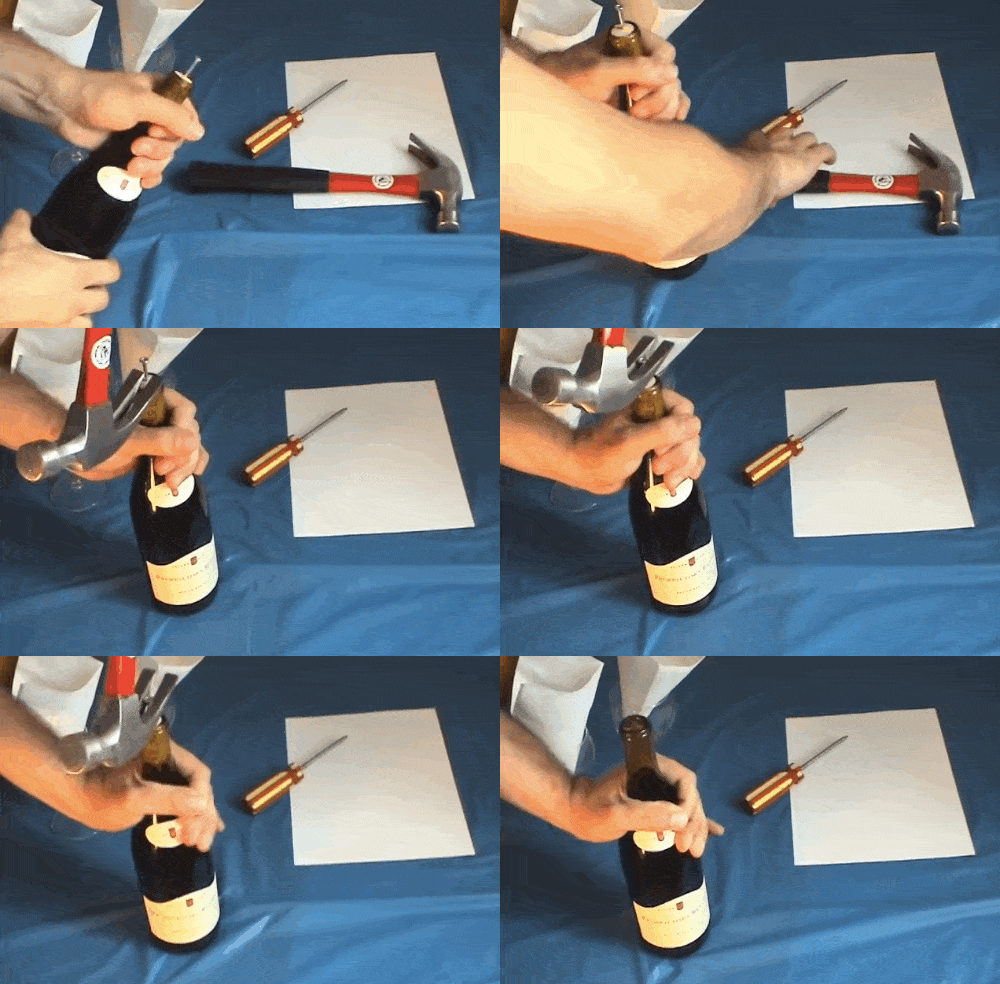
Not in the way you’re thinking, although that would be one satisfying way to do it. But to avoid shattering the glass, you’ll also need a screw, which you’ll twist down into the cork. Then use the back of the hammer to yank out the screw and cork together. At this point it will be acceptable to insist all your friends refer to you as Bacchus.
3. Knife it
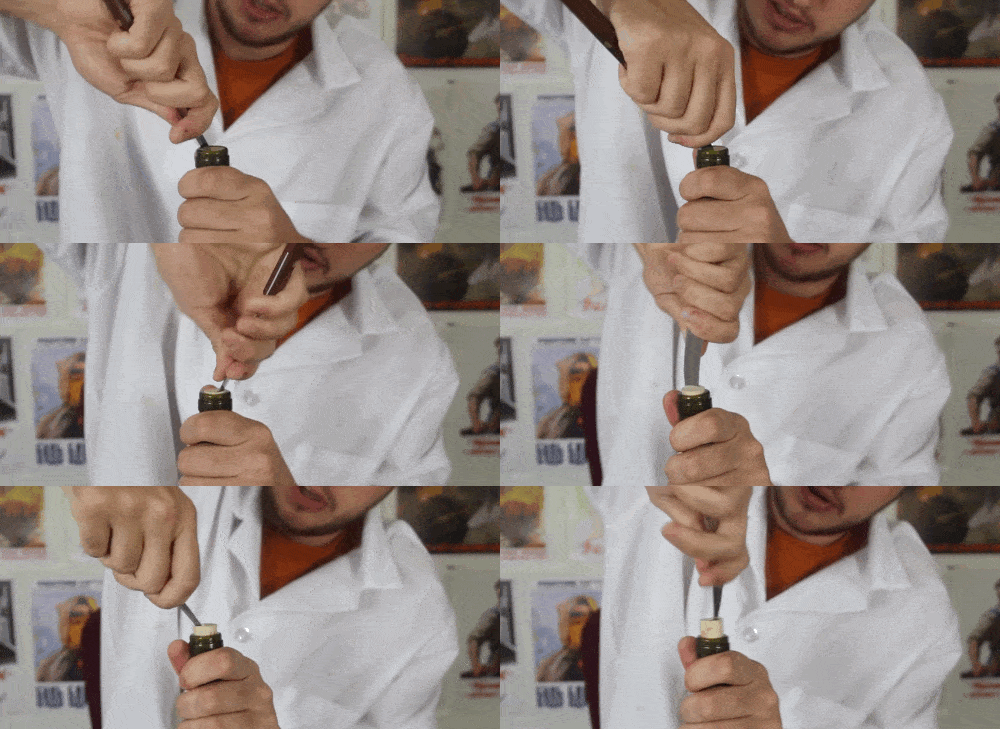
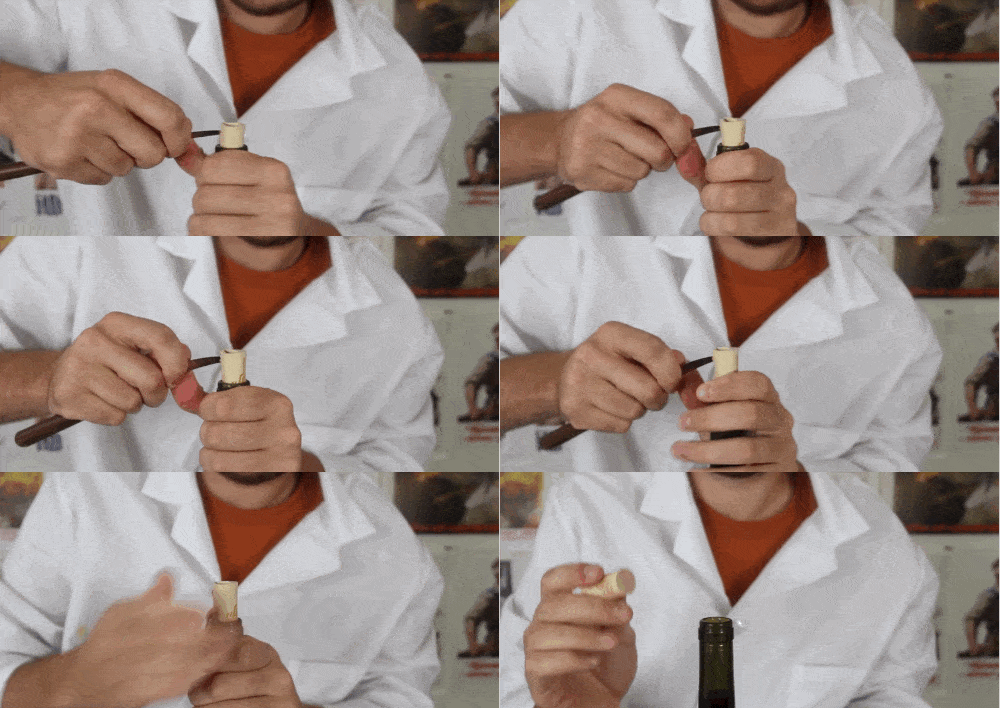
Grab a serrated knife and remove any foil covering. Stick the knife in near the edge of the cork and VERY carefully, start twisting. By pulling up and turning with the knife, the cork will begin to work its way out. When it’s a good bit out of the bottle, but not quite far enough to be pulled the rest of the way by hand, take the knife out and stick it in the side of the cork. Turn and twist until that sweet, velvety goodness flows free.
4. Pump it
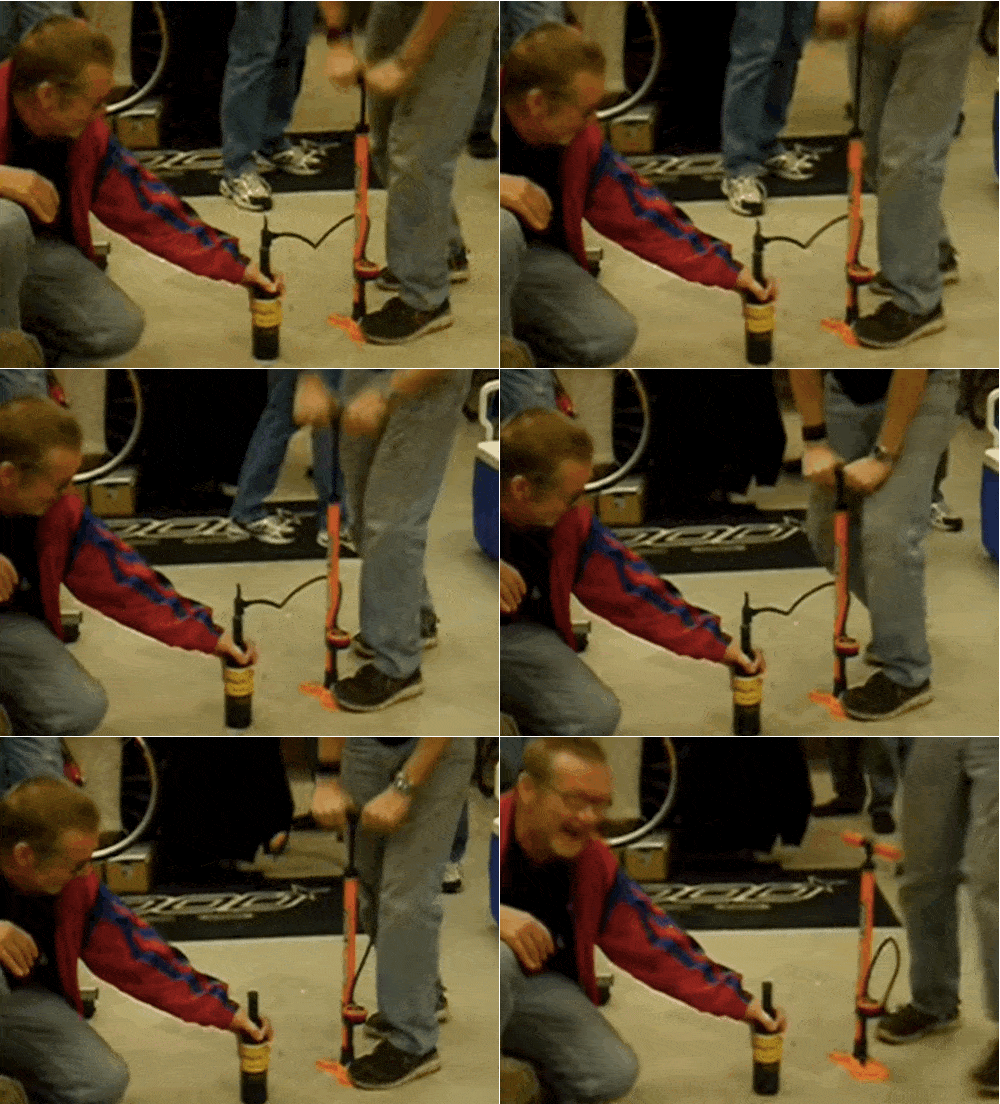
(Source: YouTube / Kristy Kreme’s channel)
Should you find yourself stuck in a bike shop or your garage with a bottle of wine, as one often is, grab the nearest bicycle pump. Wedge the pump into the cork and use some good old fashioned physical and peer pressure to pop it right out of the bottle. This also just looks like a lot of fun.
5. String it

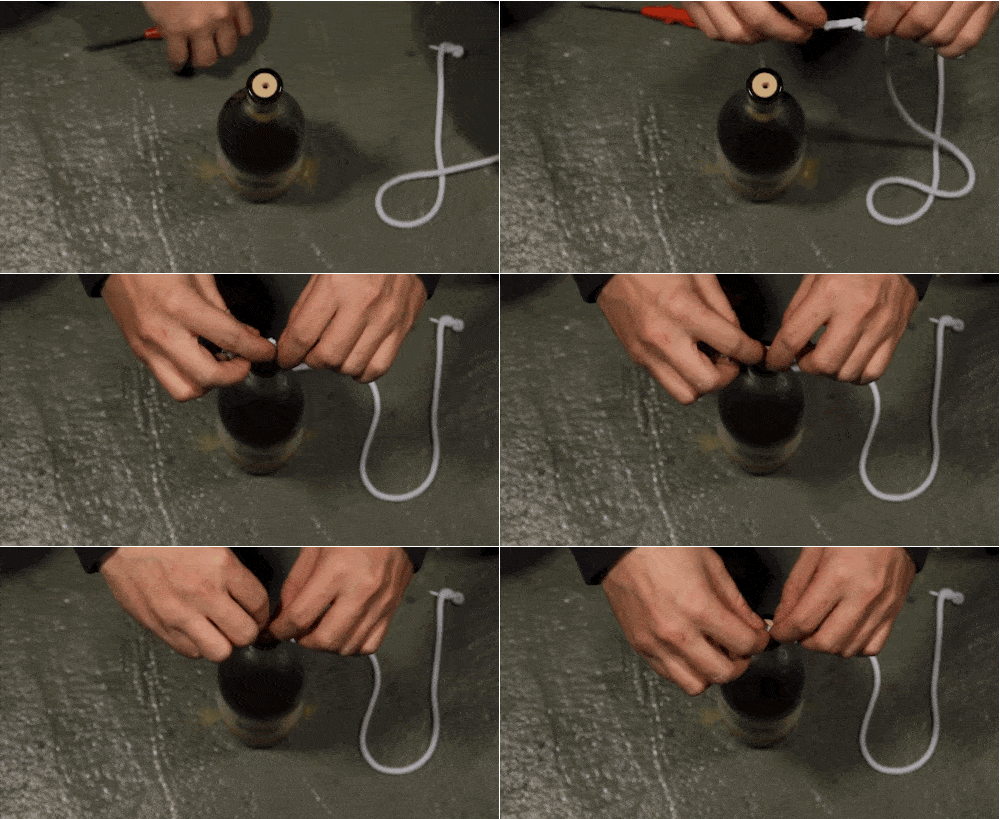

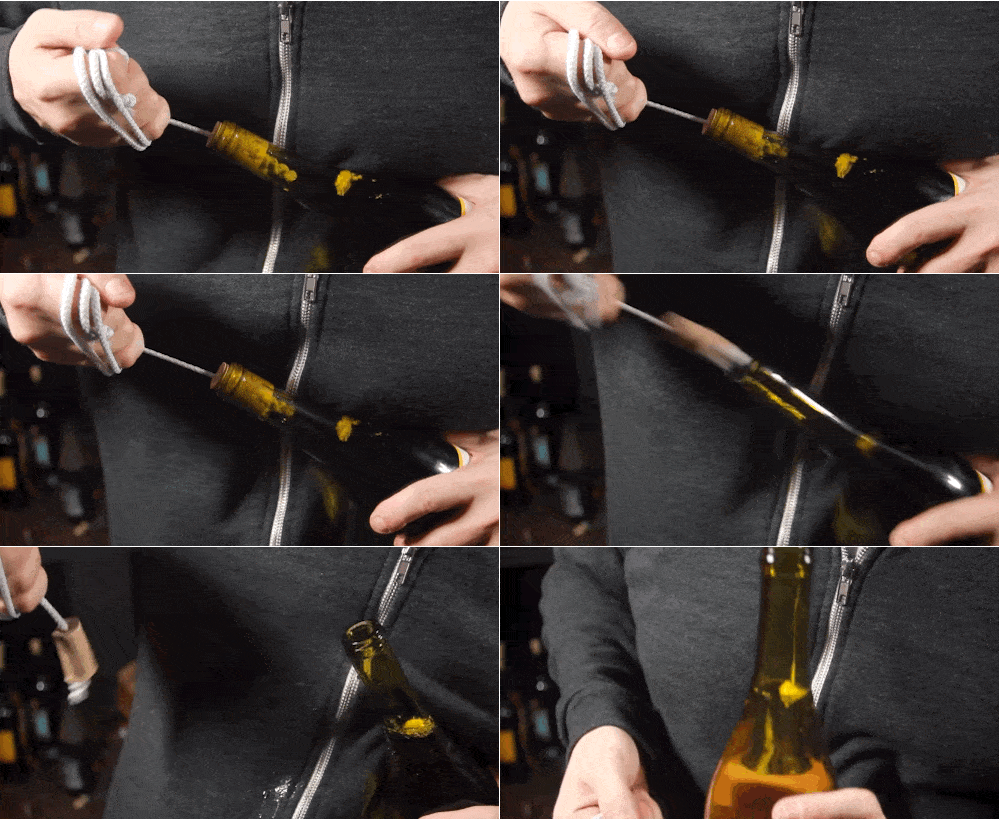
Using a screw driver, or any long, skinny, metal device, make a hole all the way through the cork. Then take a good sized piece of string or rope and tie a knot at the end. Shove that thing down through the hole in the cork, then yank it back out. This will force the cork out, if you’re strong enough. I can’t think of any better reason to start working out than to be able to open your wine bottle, especially in front of judgmental house guests.
Salut Salut!
Subscribe to:
Posts (Atom)